In most organizations:
The knowledge exists but it is fragmented and hard to apply. Truke KF is built to fix exactly this.
Truke KF is a wiki, which means it works like a website where you can create, edit, and connect pages of text. You can use it alone on your computer, with a team in your company, or in a bigger organization. But unlike a regular wiki, KF is made to help you learn from experience.
Each page in KF is called an item, and it can represent different kinds of things:
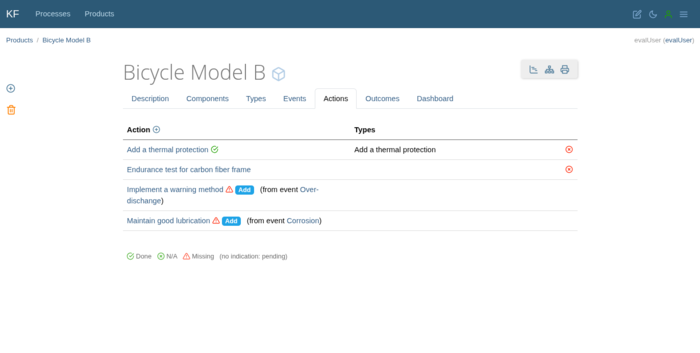
KF helps you track not just what something is, but also what has happened to it, what went wrong, and what you did about it. This means you’re not starting from scratch every time. Instead, you build knowledge as you go — and reuse it.
For example:
One powerful feature in KF is types. Any item can be based on another one — meaning it inherits what that other item had. This is great for reuse. Say you finish a project called P1, and later you start a similar one, P2. You can make P2 a type of P1, and it will automatically include the actions, problems, and checklists from P1 — so you don’t miss anything important.
Items can be have sub-items. This is how you can build a hierarchy or structure — for example, a product and its components (like a Bill of Materials), or a big process with smaller steps. Actions can also be ordered to form a plan, which KF can display as a Gantt chart.
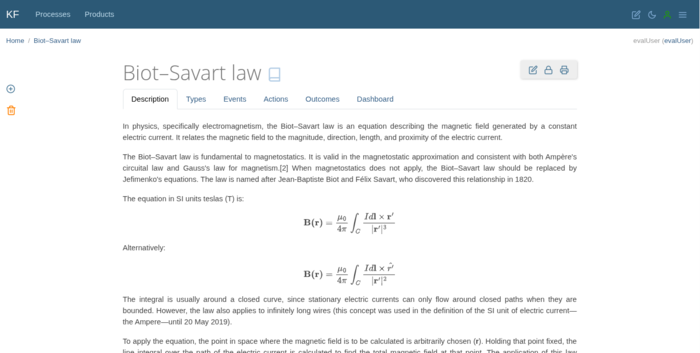
All item pages are written using Markdown, a simple way to format text. It’s easier than HTML but still lets you add structure, images, math, or attach files.
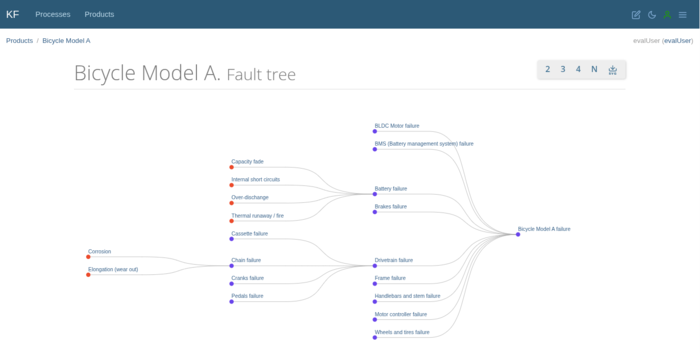
If something goes wrong, you can record it as an event. You can also link it to its possible causes and effects — creating what’s called a fault tree. KF helps you build and view these trees visually.
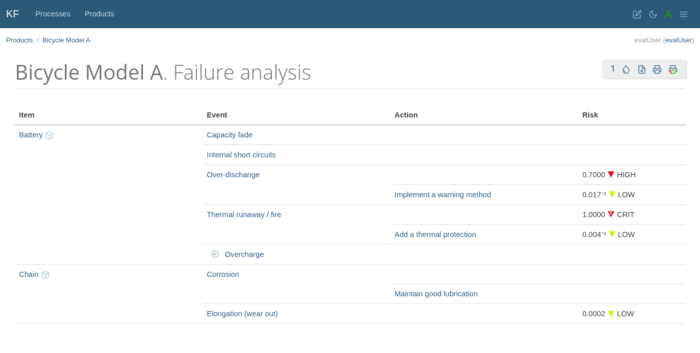
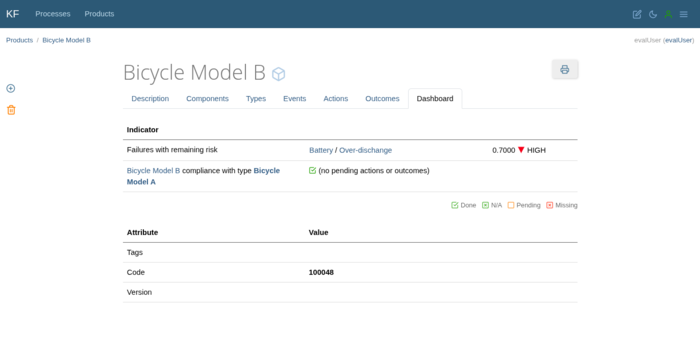
KF also supports FMEA (Failure Modes and Effects Analysis), a structured way to study risks and prevent future issues. In KF, FMEAs are built as you link items together: objects, events, actions, and risks. The result is not a separate report, but a living part of your knowledge base.
KF allows you to assess the risk of events using two values:
These values are multiplied to calculate a total risk, which can be shown in a color-coded risk matrix (green/yellow/red). KF also supports safety standards like ISO 26262, including special labels like S1–S3 for severity, and E0–E4 for exposure. You can use this in automotive, medical, aerospace, or other critical areas.
When you start something new in KF and base it on a previous item, KF generates a checklist from past actions, expected results, and known issues. It’s a way of saying: “Here’s what we learned last time — don’t forget it.” This helps you build reliable processes and avoid repeating the same mistakes.
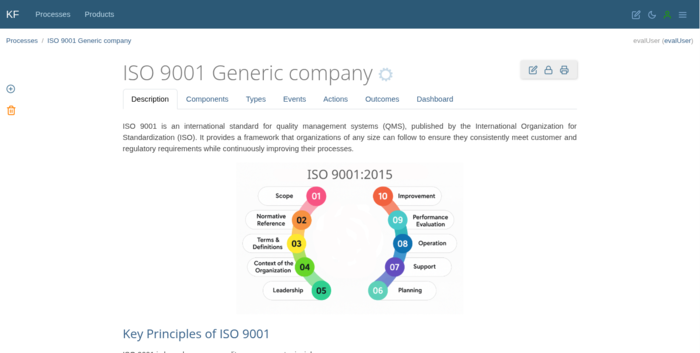
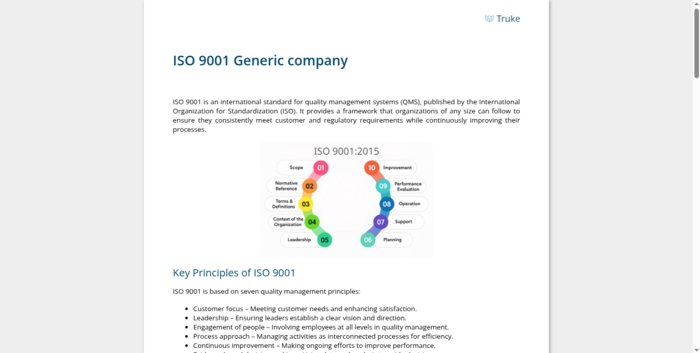
ISO 9001 includes a dedicated section on ‘Improvement’. It defines a concise but demanding set of requirements for addressing nonconformities, implementing corrective actions, and driving continual improvement. Implementing this section is not trivial, and this is precisely where Truke KF provides direct value, as these activities are at the core of its design.
Truke KF is more than a wiki. It’s a tool to document, understand, and learn from what you do. By organizing your ideas, tracking failures, managing actions, and reusing knowledge, KF helps you improve over time — whether you’re working alone, with a team, or in a company.